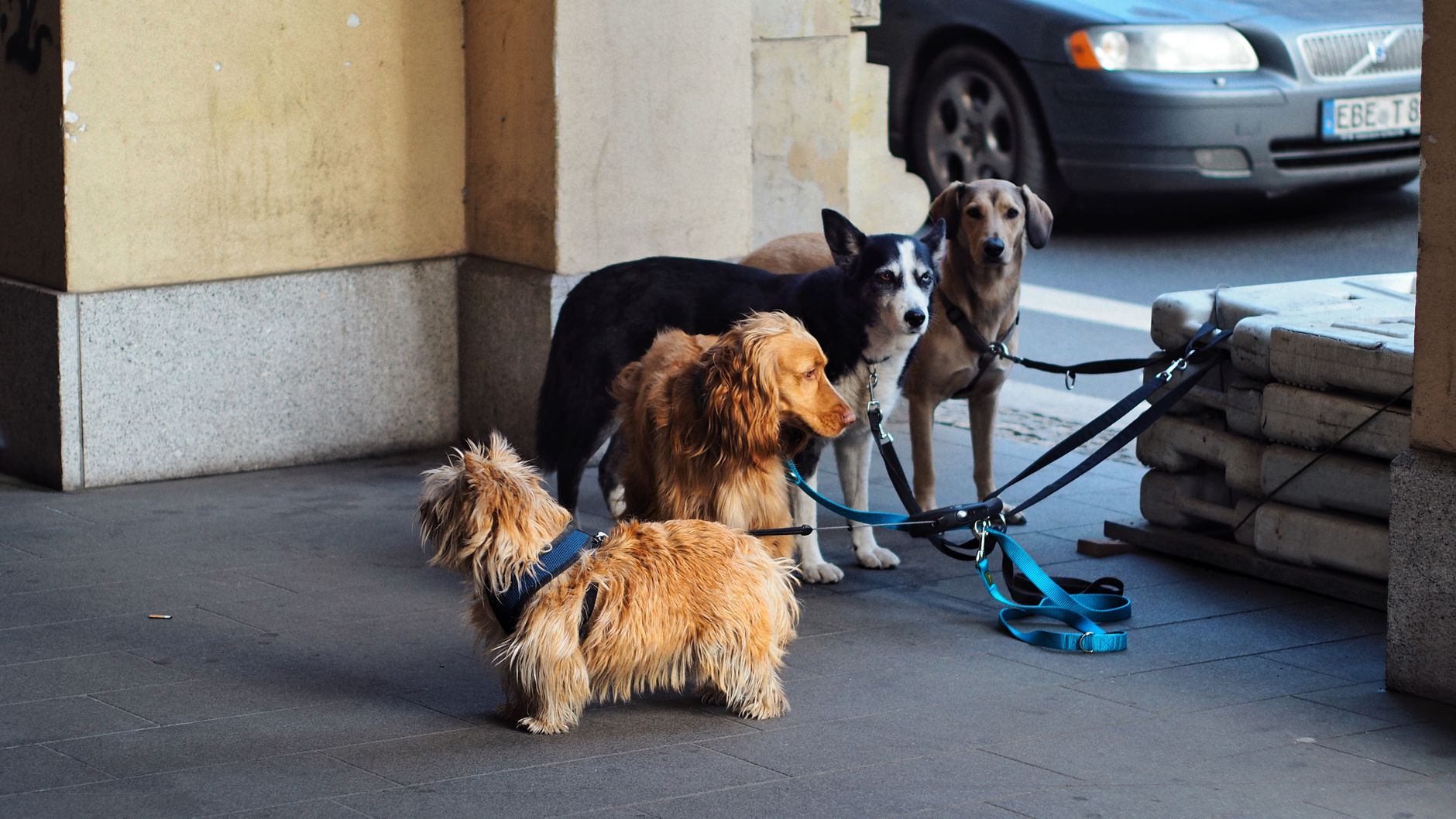
What exactly is a slip lead, and how does it differ from a standard leash?
A slip lead is a single piece of rope or webbing with a fixed loop at one end that goes over your dog's head. When your dog pulls, the loop tightens around the neck. When they relax, it loosens. There is no clip, buckle, or separate collar involved. A standard leash, by contrast, is a simple strap with a clip on one end that attaches to a separate collar or harness. That simple difference changes everything about how pressure is applied, how you correct behavior, and how safe the tool is for a large, powerful dog.
Pros of using a slip lead for large dogs
Slip leads are not inherently bad—they are actually a favorite tool among professional trainers and shelter staff for specific reasons. Here is where they genuinely shine:
- Instant control in emergencies: If your 90-pound dog bolts after a squirrel, a slip lead gives you immediate, direct feedback. The tightening action is faster than a standard leash because there is no hardware delay. This can stop a lunge before it becomes a full sprint.
- No hardware to break: A slip lead has zero metal parts. For dogs that chew through clips or snap plastic buckles, this is a durability win. The continuous loop design is also less likely to fail under extreme tension.
- Built-in correction tool: A sharp, short "pop" on a slip lead mimics a mother dog's correction. For training loose-leash walking, this can be effective if you know how to time it. It is also excellent for teaching "heel" because the pressure is directional.
- Easy to carry and deploy: Slip leads fold flat and fit in a pocket. If you are doing a quick potty break or a training session in the yard, they are less bulky than a standard leash with a heavy clip.
- Perfect for transitions: When moving a dog from a crate to a car or through a busy vet lobby, a slip lead can be slipped on in seconds without fiddling with a collar buckle.
Cons of slip leads for large dogs (and why they worry me)
Here is the honest part. After 8 years of owning and walking big dogs (including a 110-pound mastiff mix), I have seen slip leads cause more problems than they solve for casual owners. The cons are serious:
- Constant pressure on the trachea: Large breeds, especially those with thick necks (like Labs, Boxers, or Bulldogs), are prone to tracheal collapse and laryngeal paralysis. A slip lead that is even slightly snug when the dog walks forward applies continuous pressure. Over a 30-minute walk, that is thousands of micro-compressions on the windpipe.
- No release mechanism if the dog panics: If your dog gets spooked and pulls backward, the loop tightens further. Unlike a collar with a quick-release buckle, you have to physically loosen the slip lead by hand while managing a panicked animal. This is dangerous in traffic or near other dogs.
- Reinforces pulling in untrained dogs: Ironically, many dogs pull harder when they feel neck pressure (it triggers an opposition reflex). For a dog that already pulls, a slip lead can make the behavior worse, not better.
- Risk of neck injury: A sudden, hard lunge on a slip lead can cause whiplash, disc injuries, or even fainting (due to carotid sinus pressure). This is not a hypothetical—it is a known risk in veterinary medicine.
- No place to attach ID tags: You still need a separate collar for tags, so you are doubling up on equipment anyway.
Pros of standard leashes for large dogs
A standard leash, when paired with a well-fitted flat collar or a harness, is the workhorse of everyday dog ownership. Here is what it does well:
- Predictable pressure: The pressure is fixed at the point of attachment. Your dog knows exactly where the pull comes from, which makes learning easier for them and control easier for you.
- Safety release: Most standard leashes have a clip that you can release quickly if the leash gets tangled around a leg or caught on a fence. This is a lifesaver in an emergency.
- Versatility with harnesses: You can clip a standard leash to a front-clip harness (which is the safest option for pulling dogs) or a back-clip harness. This completely removes neck pressure.
- Better for long-term walking comfort: With a standard leash, you can use a padded handle or a traffic handle for close control. You can also switch hands easily without adjusting the loop.
- No risk of accidental tightening: A standard leash does not self-tighten. If you drop it, the dog is not being choked.
Cons of standard leashes for large dogs
- Hardware can fail: Cheap clips bend or break. For a powerful dog, you need a heavy-duty swivel clip that is rated for at least double your dog's weight.
- Less "feel" for corrections: If you are doing precise obedience training, the standard leash has more slack and less direct feedback than a slip lead. You have to be more deliberate with your timing.
- Bulky to carry: A 6-foot standard leash with a thick clip and padded handle is not as pocket-friendly as a slip lead.
Slip lead vs standard leash: A direct comparison for large dogs
| Feature | Slip Lead | Standard Leash |
|---|---|---|
| Neck safety | Poor (constant pressure risk) | Good (if attached to harness or flat collar) |
| Control during a lunge | Excellent (instant tightening) | Good (depends on your grip and leash length) |
| Training feedback | Excellent for corrections | Moderate (better for positive reinforcement) |
| Ease of use | Very easy to put on | Requires separate collar/harness |
| Risk of injury | High (trachea, spine) | Low (if used correctly) |
| Durability | High (no hardware) | Varies (check clip quality) |
| Best for | Training sessions, vet visits, dog shows | Daily walks, hiking, casual strolls |
How to choose the right one for your large dog
Here is my practical decision framework, based on years of trial and error:
- If your dog pulls on walks: Do not use a slip lead. Use a standard leash attached to a front-clip harness (like a Freedom or Easy Walk). This is the safest, most effective fix.
- If you are doing formal obedience training: A slip lead is acceptable, but only if you have been taught how to use it by a professional. Never leave it on your dog unattended.
- If you need a quick "grab and go" leash for a car ride or vet visit: Slip lead wins. It is fast and compact.
- If you have a puppy or adolescent large breed: Use a standard leash with a flat collar and start loose-leash training immediately. Do not use a slip lead on a puppy—their tracheas are even more delicate.
For daily walks, I personally recommend a heavy-duty 6-foot standard leash with a padded handle. The fixed length gives you better control than a retractable, and the padding saves your hands if your dog does lunge. Pair it with a well-fitted flat collar or a harness, and you have a setup that is safe for the dog and comfortable for you.
Frequently Asked Questions
Can I use a slip lead on a dog that pulls?
You can, but you should not. For a pulling dog, a slip lead will likely increase pulling due to the opposition reflex, and it risks injuring the neck. Use a front-clip harness with a standard leash instead.
Is a slip lead the same as a choke chain?
No. A choke chain is a metal chain that tightens and releases; a slip lead is a fabric loop that serves the same function but is softer and less likely to damage fur. Both are aversive tools and should be used only with proper training knowledge.
How tight should a slip lead be on a large dog?
It should be loose enough to slip two fingers between the loop and the dog's neck when the dog is relaxed. If it is any tighter, it is applying constant pressure, which is harmful.
Can a slip lead cause permanent damage to a dog's throat?
Yes. Repeated or forceful tightening can cause tracheal collapse, laryngeal paralysis, or damage to the cervical spine. Large breeds are especially vulnerable due to their weight and anatomy.
What is the best leash for a 100-pound dog?
A standard 6-foot leash made of biothane or nylon, with a heavy-duty brass or stainless steel clip rated for over 200 pounds. Avoid retractable leashes entirely for dogs over 50 pounds.
Should I use a slip lead for a reactive dog?
No. A reactive dog needs a harness (front-clip) and a standard leash to prevent neck injury during sudden lunges. A slip lead can escalate reactivity because the pain causes more stress.
Are slip leads allowed in dog training classes?
Many balanced trainers use them, but most positive-reinforcement classes ban them. Check with your trainer first. If you are training at home,