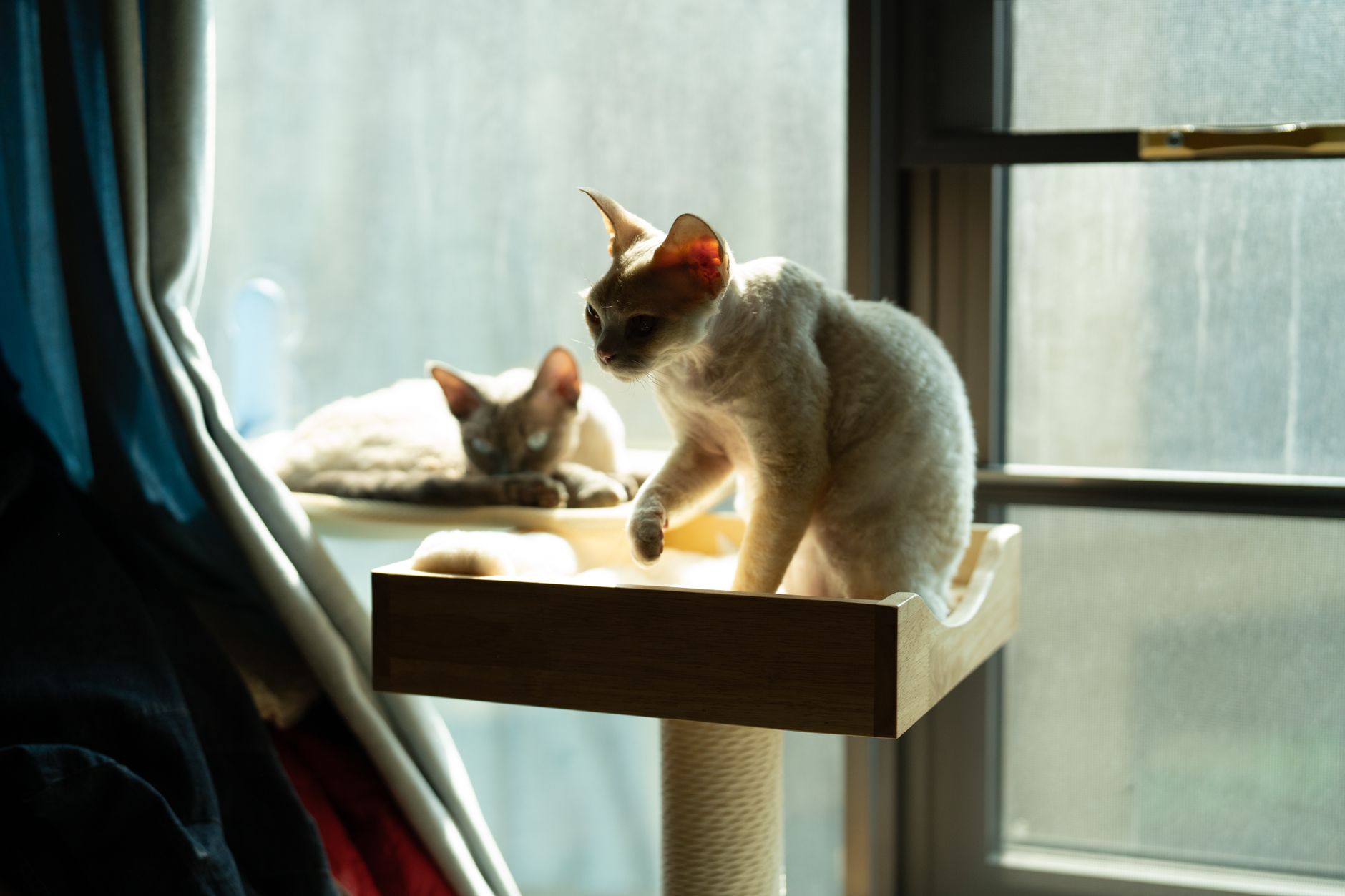
What does cat boredom actually look like?
After eight years of watching my own crew—a grumpy tabby, a hyperactive Siamese mix, and a rescued senior—I’ve learned that a bored cat rarely looks “lazy.” Instead, they become creative with their frustration. Unlike dogs, who might bark or dig, cats often turn their boredom inward or onto your furniture. Understanding the signs is the first step to a happier, healthier feline.
8 signs your cat is bored (and not just being a cat)
1. Destructive scratching beyond the scratching post
2. Excessive sleeping (more than 16 hours a day)
Adult cats sleep 12–16 hours daily, but if yours is hitting 18–20 hours and seems lethargic when awake, boredom is likely. A bored cat has nothing to do except sleep. I noticed my tabby, Mochi, started napping in the same spot for 6 hours straight—that was my wake-up call.
3. Over-grooming or hair loss
4. Sudden aggression or irritability
A bored cat might swat at you when you walk by, hiss at the dog, or start ambushing your ankles. This isn’t malice—it’s pent-up energy with no outlet. Think of it as a toddler who missed naptime. My Siamese, Luna, would attack my feet every morning until I started a 10-minute feather wand session before breakfast.
5. Attention-seeking behaviors (knocking things off counters)
6. Eating too fast or begging for food
When a cat has nothing else to do, food becomes a hobby. You might notice them wolfing down meals, stealing treats, or constantly meowing at the food bowl. This can lead to obesity—
7. Pacing or repetitive circling
A bored cat may walk a predictable path around the room, pace back and forth, or circle the same spot. This is often mistaken for “weird cat behavior,” but it’s a sign of restlessness. In multi-cat households, pacing can also trigger territorial disputes.
8. Hiding more than usual
While some cats are naturally shy, a sudden increase in hiding (under the bed, in closets, behind furniture) can mean they’re disengaged from their environment. Boredom can lead to depression-like symptoms—your cat might simply have given up on finding fun.
What to do: 5 proven fixes for a bored cat
Step 1: Rotate toys—don’t just buy more
Cats lose interest in toys after 3–5 days. Keep a bin of 8–10 toys and swap them out weekly. Include a mix of textures (crinkle, fur, feather) and types (wand toys, balls, puzzle feeders). A 2023 survey by the Pet Product Innovation Institute found that cats showed 3x more play engagement when toys were rotated.
Step 2: Create vertical territory
Step 3: Schedule two daily play sessions
Aim for 10–15 minutes of active play, morning and evening. Use a wand toy that mimics prey—darting, hiding, pouncing. Let your cat “catch” the toy at the end. This mimics a hunting sequence and releases endorphins. After play, offer a small treat to complete the “hunt-eat-groom-sleep” cycle.
Step 4: Introduce puzzle feeders
Replace one meal a day with a puzzle feeder. It stimulates their brain and slows down fast eaters. Start with a simple treat ball, then move to more complex puzzles. Even a cardboard box with holes cut in it works.
Step 5: Add environmental enrichment
- Bird feeder outside a window (cats love watching)
- Cat grass or catnip (safe, stimulating)
- Cardboard boxes (instant forts)
- Fountain water dish (moving water is intriguing)
- Clicker training (yes, cats can learn tricks—it’s mentally exhausting for them)
Comparison: Bored cat vs. sick cat
| Sign | Likely Boredom | Might Be Medical |
|---|---|---|
| Destructive scratching | Yes | Rarely |
| Over-grooming | Possible | Also possible (allergies, pain) |
| Hiding | Possible | Yes (pain, illness) |
| Aggression | Yes | Yes (hyperthyroidism, arthritis) |
| Sleeping too much | Yes | Yes (kidney disease, diabetes) |
| Eating changes | Yes (fast/begging) | Yes (loss of appetite or polyphagia) |
Bottom line: If your cat shows any sign for more than 3 days, or if they also have vomiting, diarrhea, weight loss, or changes in litter box habits, see a vet first.
Add variety gradually: Rotate familiar activities instead of presenting every toy at once. For supervised interactive play, view the retractable cat wand toy.
Related reading: keep an indoor cat stimulated and why cats get zoomies.
Frequently Asked Questions
How much play time does a cat need daily?
Most cats need at least 20–30 minutes of active play daily, split into two 10–15 minute sessions. Kittens and high-energy breeds (Bengals, Siamese, Abyssinians) may need 45 minutes or more.
Can a bored cat become depressed?
Yes. Chronic boredom can lead to learned helplessness and depression-like symptoms (lethargy, loss of interest, hiding). Environmental enrichment is a key prevention strategy.
Is it okay to leave a cat alone for 8 hours?
Most adult cats can handle 8 hours alone if they have toys, a window view, and a clean litter box. But they should not be left alone for 24+ hours regularly without a sitter.
Do laser pointers help with boredom?
Laser pointers can be fun, but they can also cause frustration because the cat never “catches” the prey. Use them sparingly, and always end the session by pointing the laser onto a physical toy or treat.
How do I know if my cat is bored or just lazy?
A lazy cat will still engage if you offer a high-value toy (like a feather wand). A bored cat may ignore it at first or show repetitive behaviors. Try a new toy—if they perk up, they were bored.
Can two cats keep each other from getting bored?
Often yes, but not always. Some cats prefer solitary play. Even with a companion, each cat needs individual enrichment and play time with you. A second cat is not a substitute for interactive toys.
What’s the best toy for a bored cat?
Interactive wand toys that mimic prey movement are the most effective. Puzzle feeders and treat-dispensing balls are also excellent. Avoid toys with small parts that can be swallowed.
Should I use cat TV or videos for enrichment?
Cat-safe videos (birds, squirrels, fish) can provide visual stimulation, but they don’t replace physical play. Use them as a supplement, not a primary solution. Always supervise screen time.