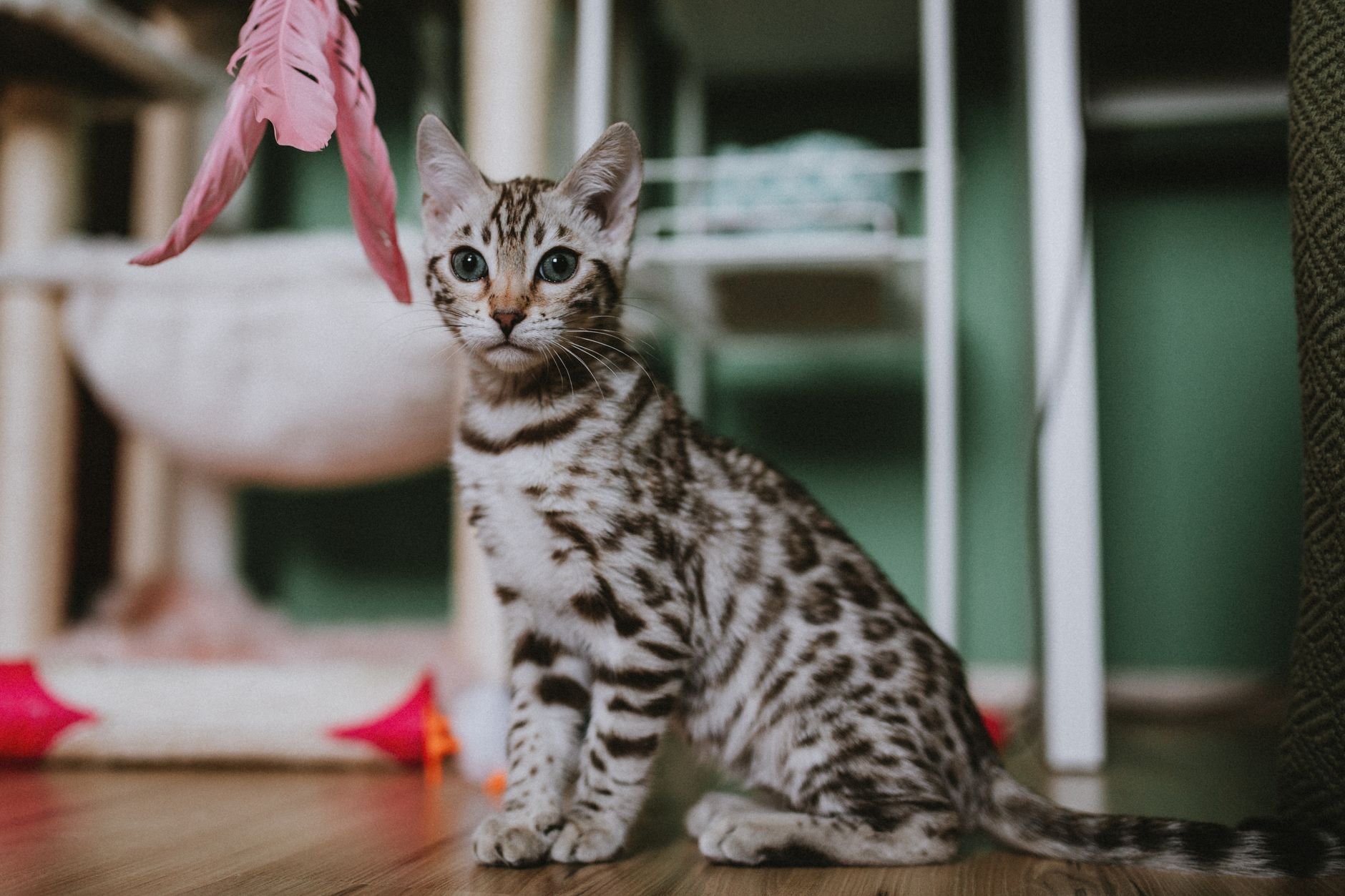
Why does playtime matter so much for cats?
How much playtime do cats really need? The expert breakdown
| Cat Life Stage | Recommended Daily Play | Session Length | Notes |
|---|---|---|---|
| Kittens (0–12 months) | 45–60 minutes total | 5–10 minutes, 6–8 sessions | High energy; short bursts prevent overstimulation |
| Adults (1–7 years) | 30–40 minutes total | 10–20 minutes, 2–3 sessions | Focus on interactive wand toys |
| Seniors (8+ years) | 15–25 minutes total | 5–10 minutes, 2–3 sessions | Gentler play; avoid high jumps |
| High-energy breeds (Bengal, Siamese, Abyssinian) | 60+ minutes total | 15–20 minutes, 3–4 sessions | Need puzzle feeders and climbing enrichment |
What counts as “real” play? (Hint: It’s not just a laser pointer)
Many owners make the mistake of leaving toys out or using only laser pointers. Cats need play that satisfies their predatory instincts. Here’s a step-by-step guide to effective play:
- Start with a stalking phase – Use a wand toy with feathers or fur to mimic prey. Move it slowly, then pause. Let your cat crouch and watch.
- Trigger the chase – Drag the toy away at a moderate speed, encouraging a sprint. Avoid jerky movements that frustrate.
- Allow the catch – Let your cat pounce and “kill” the toy every few minutes. This releases endorphins and prevents frustration.
- End with a reward – After the last catch, offer a small treat or a meal. This completes the “hunt-eat-groom-sleep” cycle.
How do I know if my cat is getting enough play?
Watch for these signs of under-stimulation:
- Excessive meowing or attention-seeking
- Knocking objects off shelves
- Aggression toward other pets or people
- Overgrooming or fur pulling
- Weight gain despite normal feeding
What if I’m busy? Making the most of limited time
Life gets hectic. Here are three strategies for busy owners:
- Use puzzle feeders – Replace one meal with a food-dispensing toy. This provides 10–15 minutes of mental stimulation.
- Schedule play like a meeting – Set two 10-minute alarms daily. Even short, focused sessions beat none.
The biggest playtime mistakes (and how to fix them)
- Mistake #1: Playing only at night – Cats are crepuscular (most active at dawn/dusk). Play 30 minutes before your bedtime to tire them out.
- Mistake #2: Using hands as toys – This teaches biting. Always use a wand or toy.
- Mistake #3: Stopping too early – Let your cat catch the toy at least twice per session. Abrupt endings can leave cats frustrated.
- Mistake #4: Ignoring individual preferences – Some cats love crinkly toys; others prefer soft fur. Experiment for a week to find what excites yours.
How do I keep play sessions interesting?
Rotate toys every 3–4 days to prevent boredom. Cats are natural hunters who thrive on novelty. Try these ideas:
- Wand toys with interchangeable attachments (feathers, fleece strips, bell balls)
- Cardboard boxes with holes for “whack-a-mole” style play
- Catnip or silver vine to refresh old toys
- Treat-dispensing balls for solo play
Choose the Right Guide for Your Question
This page focuses on how to choose a realistic daily amount of play by observing age, health, energy, and recovery. For the related question, read how to structure an interactive cat play session. Keeping these questions separate makes it easier to act on the information you need.
Frequently Asked Questions
Can I overplay with my cat?
Yes. Signs of overstimulation include dilated pupils, tail lashing, flattened ears, or sudden biting. Stop immediately if you see these. Most cats need breaks every 5–10 minutes.
Is 5 minutes of play enough for a senior cat?
For a healthy senior cat, 5–10 minutes twice daily is often sufficient. Adjust based on their mobility and interest. Never force play if they show reluctance.
My cat ignores toys—what should I do?
Try different textures (faux fur, crinkle, feathers) and movements. Some cats prefer slow, slithering motions over fast ones. Also check if the toy smells like you—cats prefer neutral scents.
Should I play with my cat before or after feeding?
Play before feeding. This mimics the natural hunt-eat cycle and helps with digestion. Wait at least 30 minutes after a meal for high-energy play to avoid vomiting.
Do automatic laser toys count as play?
They can supplement, but never replace interactive play. Cats need to “catch” something. Use a laser pointer for 2–3 minutes, then end with a physical toy they can pounce on.
How do I play with two cats at once?
Use separate wands or one wand with two attachments. Monitor for resource guarding. If one cat dominates, play with them individually in separate rooms.
Can I use a fishing pole toy for kittens?
Yes, but supervise closely. Kittens can swallow small parts. Choose toys with securely attached, non-toxic materials.
Does breed affect playtime needs?
Absolutely. Bengals, Savannahs, and Siamese often need 45–60 minutes daily. Persians and Ragdolls may thrive on 15–20 minutes. Adjust based on your cat’s energy level, not just breed stereotypes.